
 09/24/2025
by Michael McCarty
Founder, Tribeca Printworks
Whether you’re a gifted photographer or have found the perfect print for your space, choosing the best frame for your landscape photography can be a complex decision. The experts at Tribeca Printworks are here to help.
We’ll examine why your artwork needs a frame, how to frame landscape photos, what kind of frame to choose and some of the most common mistakes that you can avoid with our advice.
The Case for Framing Landscape Photography
Framing landscape photography offers significant benefits, including:
- Protection: High-quality frames, archival materials, and UV-resistant glass protect against dust, humidity, and UV rays.
- Focus: The right frame draws the eye to the image and enhances its mood, detail and depth of color.
- Appearance: A stylish frame accentuates decor and allows you to create a gallery-quality look with an elegant finish.
Best Frame Styles for Landscape Photography
When determining the best frame for your landscape photography, the frame style options are diverse. Some popular options include:
Classic Wood Frames
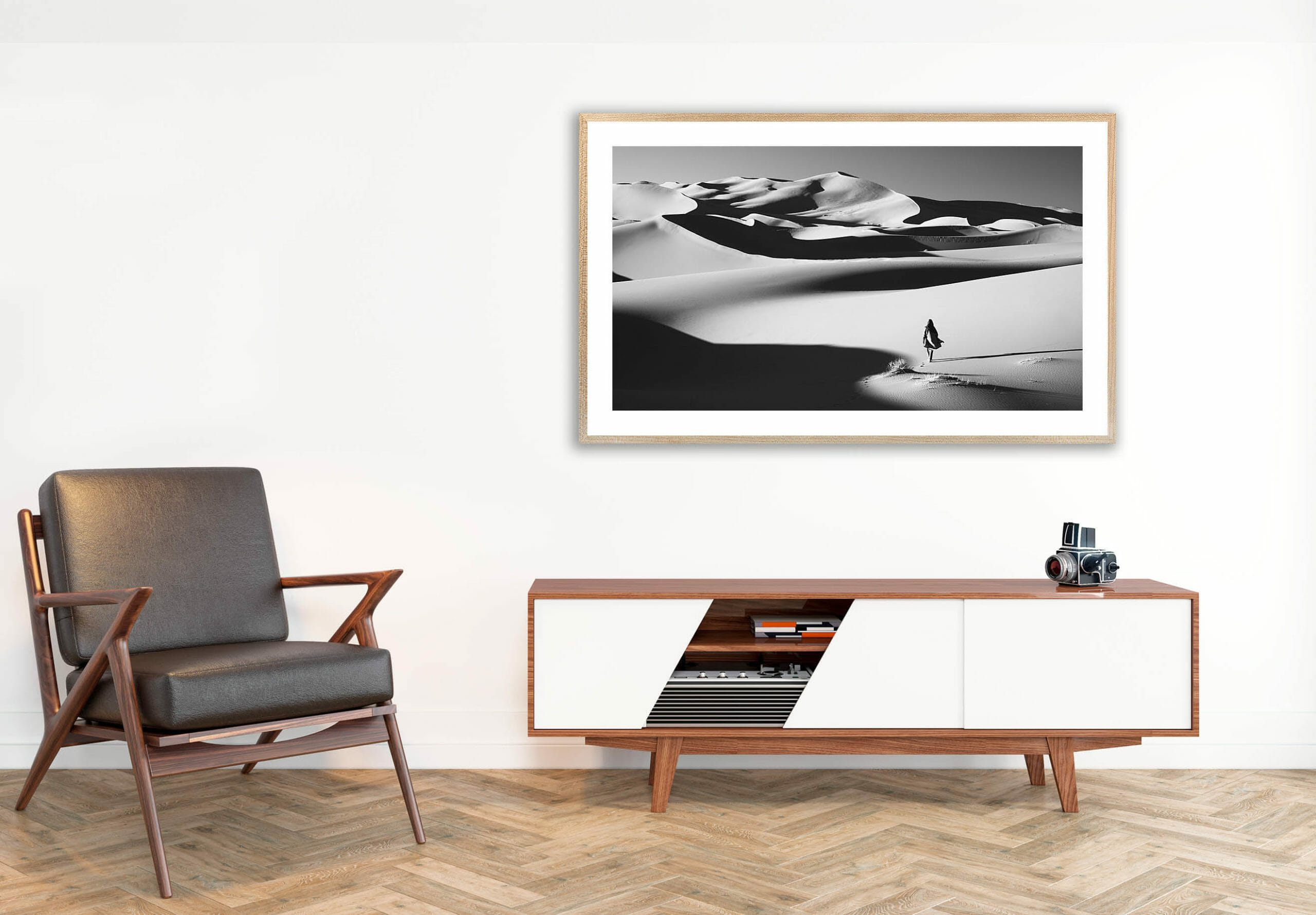
Classic wooden frames are ideal for rustic landscapes like forests and mountains. Wood is a natural material and an excellent complement to natural photos. One advantage of wooden frames is that they are available in various colors. Some options include walnut, oak and natural wood hues.
Floating Frames
These frames make images look like they’re floating and are most common for canvas prints. The main benefit of this framing style is that it adds dimension to the photos. Furthermore, using floating frames for your landscape prints offers clean lines, making it ideal for contemporary room decor.
Float Mounting
While they may seem similar to floating frames, float mount frames are unique. This framing style is best for traditional print styles. Placing the picture atop the mat makes the photograph appear as though it’s floating compared to the mat beneath it. In addition, the mat will not cover any part of the image, displaying the full landscape.
Panoramic Frames
Extra-wide prints like panoramic shots require unique framing. You could split the image into several smaller images and create a unique display, but investing in custom framing is an excellent option.
Custom framing for panoramic landscape photos offers two main advantages. First, it eliminates the need to break up the photo — unless you want to, for effect. Second, it ensures your image has the support it needs. Custom framing is an excellent option for oddly sized, extra-wide or unique prints.
Explore Frame Colors and Materials to See What Works for Different Landscapes
When selecting the best frame color for landscape prints, you need to consider the type of landscape. Here’s a quick overview of some materials and colors that suit specific landscape types.
- Beach or ocean scenes: Lighter and white woods or metals — like silver — complement these pictures.
- Forest or mountain landscapes: These pictures work well with dark woods like walnut and rich, black metals.
- Desertscapes: Warm woods like maple and oak, as well as richer light metal tones like bronze, work well here.
- Cityscapes or urban views: Cityscapes work well with black metals, gunmetal colors, and minimalist wood designs.
- Snowy scenes: Complement snowy brightness with white and light woods and silver metal frames.
Do You Need Matting and Liners?
While matting isn’t a necessity for every landscape photograph, it offers some significant benefits for many images. Consider using photo mats when:
- Your photo benefits from a clean border
- The landscape contains specific details that you want a mat to highlight
- You need to create a space between the print and the glass
Liners are excellent when using glassless frames or framing immense paintings. They offer similar benefits to matting.
When choosing a mat or liner color, aim for contrast without overwhelming the image. White is generally a fantastic option for brighter photos, while black is great for darker, more dramatic scenes.
Sizing and Proportion Framing Tips for Large Landscape Prints
When framing landscape photography, consider the frame’s size and proportion relative to the image and the wall. As a rule of thumb, the artwork you choose for a wall should take up two-thirds to three-quarters of the wall space.
When choosing a frame size, maintain your image’s aspect ratio to avoid cropping and keep the borders balanced. If you’re using a mat, ensure the frame does not exceed the visual weight of the mat to maintain a well-structured look at a distance and directly in front of the photograph.
Displaying Your Framed Landscape Photography
After you’ve implemented all our framing tips for your large landscape prints, you’re ready to hang your images. Here are a few things to bear in mind when doing so:
Hanging Height
Embrace the ideal picture hanging height. Generally, this benchmark places the photograph’s center at eye level with 6 to 12 inches of space between the frame’s lower edge and any furnishings in the room. These guidelines give your image room to breathe in the space.
Display Layout
When preparing a wall to display your landscape photos, there are a few different options. You can opt for the standard grid-type setup, which works well for matching frames and height. A free-form layout is more casual and allows you to employ a free-spirited approach.
One popular way to display landscape photos is to crop them into smaller, continuous pictures and create an image series. Whichever layout you choose, it’s essential to create cohesion throughout by selecting matching frames and creating a common visual thread.
Common Mistakes to Avoid
When framing landscape photography, there are a few common mistakes you should try to avoid.
- Matching the frame to your wall: Choosing a frame color that blends into your wall reduces the frame’s effect. Depending on the image’s purpose and your desired effect, you can either choose a frame that contrasts with the wall color or opt to recolor the wall.
- Selecting the wrong mat: Aim for a color that provides some contrast without overpowering the picture. Overbright colors may overpower, while the wrong dull color may underwhelm.
- Buying cheap glass: UV-protective glazing is imperative for longevity and aesthetics. While it may demand a higher initial investment, it will pay dividends over the photo’s lifespan.
Protect Your Prints With Correct, Custom Framing From Tribeca Printworks
Choosing the best frame for your landscape photography is essential to its overall presentation. The right frame elevates appearance, prevents distraction, and enhances the photo’s tones. Are you unsure which framing style would suit your landscape photo?
Contact Tribeca Printworks today for all your framing needs. From custom framing to frame consultations, we’ll support you at every step. Just like the landscape, the place you hang it will be a space you love.